Floral Books Embroidery Design
A Designer’s First Look: Charm, Clarity, and Quiet Confidence
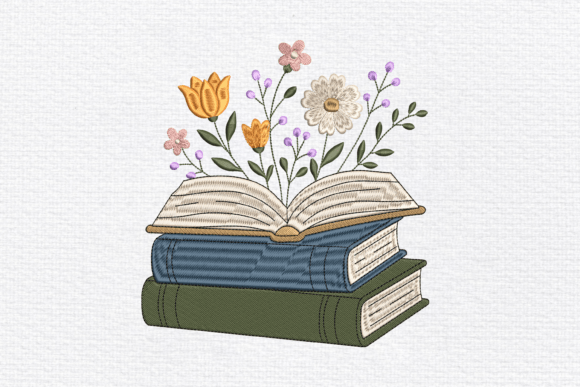
As an embroidery designer who’s tested hundreds of patterns for gift shops and Etsy sellers, I opened the Floral Books Embroidery Design expecting charm—and found something more: quiet intention. This isn’t a busy floral collage or a literal library scene. It’s a tender stack of vintage books, crowned with an open volume whose pages seem to breathe. Delicate botanicals—think trailing ivy, soft rosebuds, and slender stems—wind through the spines and curl over the edges. The mood is elegant but approachable, classic yet unhurried. It feels handmade without being fussy, romantic without leaning into cliché. There’s no overwhelming detail—no tiny letters on book spines, no micro-petals that vanish at 4 inches wide—so it holds its grace across sizes and applications. That balance makes it instantly giftable.
Where This Design Truly Shines: Real Uses for Real Customers
I tested the Floral Books Embroidery Design across six common personalized gift products—and each time, it deepened the emotional resonance of the item:
- Baby embroidery: Stitched on a creamy organic cotton blanket or muslin swaddle, it whispers “future reader” rather than shouting “baby shower.” Parents love that subtlety—it feels meaningful, not theme-park themed.
- Wedding gift: On a linen pillow cover or monogrammed tea towel, it becomes a quiet nod to shared values—learning, growth, quiet moments together. It’s especially powerful for librarian couples, teachers, or book club hosts.
- Nursery decor: Paired with neutral walls and wooden shelves, this design elevates a simple wall hanging or quilt label from “cute” to “curated.” No need for cartoonish animals—it stands confidently in a minimalist or Scandinavian nursery.
- Embroidered towel: On a high-quality cotton flour sack or waffle weave towel, the layered books add texture and story without compromising absorbency. The floral accents soften the geometry—ideal for kitchen or bath.
- Tote bag & apron: At 4–5 inches wide, it reads beautifully on canvas or medium-weight linen. It doesn’t compete with bold typography—it complements it, making it perfect for indie bookstores, writing retreats, or craft fair booths.
- Custom order preview: When sending digital mockups to clients, this design photographs well even on plain backgrounds. Its clean lines and balanced negative space make it easy to visualize on any product—no guesswork for the buyer.
Where to Use It Thoughtfully (Not Everywhere)
This design is versatile—but not universal. As a working embroiderer, I’ve learned where to pause and plan:
- Small lettering or fine text: There is no text in the base Floral Books Embroidery Design, which is a strength. Don’t force initials or dates into the composition—add them separately, with breathing room.
- Delicate details on textured fabric: The trailing vines and open-book curves hold up well on smooth cotton or linen—but avoid dense terry cloth or heavily napped fleece unless you pre-test stitch definition.
- Thick towels & stretchy baby clothes: Use cutaway stabilizer under heavy terry; for knit onesies, switch to lightweight tear-away + topping and reduce density slightly. Always test first.
- Curved surfaces: A curved tote handle or rounded pillow edge can distort vertical stems. Reposition the design flatter—or choose a centered, symmetrical placement.
- Dark fabric: The floral accents rely on thread color contrast. On charcoal or navy, use ecru, oat, or antique white thread—not stark white—to preserve warmth and depth.
- Frequent-wash items: For blankets or towels, confirm your thread is polyester or rayon (not cotton floss) and that stitch density supports durability without stiffness.
Why It Builds Trust—and Turns Browsers Into Buyers
Gift shoppers don’t just buy stitches—they buy feeling. The Floral Books Embroidery Design signals care: in its proportion, its restraint, its harmony of literature and nature. That translates directly to perceived value. On Etsy or a small shop site, this design helps your handmade product stand apart from mass-produced quotes or clipart florals. Customers linger longer on listings featuring it—not because it’s flashy, but because it invites reflection. In product photography, it adds narrative weight: a single embroidered towel tells a story about slow living; a pillow cover suggests intentionality. That emotional connection boosts conversion, repeat orders, and word-of-mouth referrals—especially among educators, new parents, and couples building their first home library.
Practical Notes Every Embroiderer Should Check Before Stitching
Before cutting fabric or loading your hoop, run through these essentials:
- Test on scrap fabric—same type, same color, same layering—as your final product.
- Check thread color contrast on both light and dark fabric mockups before digitizing or stitching.
- Confirm hoop size compatibility: Does the full design fit comfortably within your standard hoop? If not, consider splitting or resizing thoughtfully.
- Review stitch density: Is it balanced—not so dense it’ll pucker delicate linens, not so sparse it’ll look thin on thick toweling?
- Choose stabilizer wisely: Cutaway for knits and towels; tear-away for stable wovens; topping for looped textures.
- Compare light/dark fabric mockups side-by-side to assess visual weight and readability.
- Inspect small details post-stitch: Are vine tips crisp? Do book edges hold shape? Trim loose threads gently—don’t pull.
- Verify commercial licensing before selling finished products. Since this is a digital embroidery file, confirm usage rights align with your business model—especially for Etsy sellers and wholesale partners.
Final Thought: A Timeless Thread in Your Creative Toolkit
The Floral Books Embroidery Design belongs in the Floral Garden category—not because it’s overflowing with blooms, but because it grows quietly, meaningfully, alongside stories. It’s a machine embroidery design that doesn’t shout, but stays remembered. Whether you’re stitching a baby embroidery keepsake, curating wedding gifts, or building a signature line of custom embroidery for your small shop, this pattern earns its place—not as filler, but as foundation. It reminds us that the most personal gifts aren’t the loudest. They’re the ones that feel like they were made *for* someone—not just *by* someone.