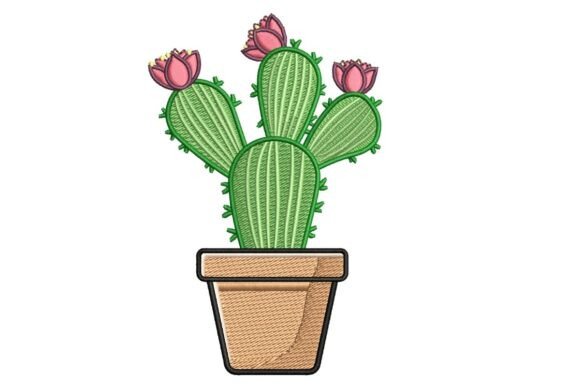
Potted Prickly Pear Cactus
A Desert-Infused Design That Builds Brand Warmth—Not Just Whimsy
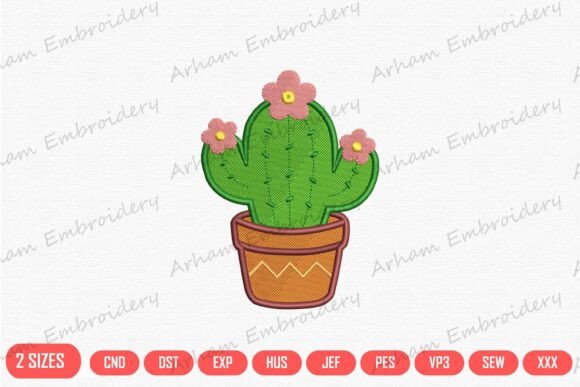
As an embroidery designer who’s developed hundreds of machine embroidery designs for small businesses—from indie bakeries to desert-themed boutiques—I approached the Potted Prickly Pear Cactus with a practical eye: not just “Is it pretty?” but “Will it earn trust, hold up in production, and strengthen brand identity across real-world merchandise?” The answer is a confident yes—with smart execution. This isn’t a decorative filler design. It’s a grounded, earth-toned emblem that balances organic charm with quiet professionalism. The terracotta pot anchors the composition; the prickly pear adds subtle texture and regional character without leaning into cliché. It reads as handmade but intentional—rustic *and* refined—a rare sweet spot for brands wanting authenticity without sacrificing polish.
Where Potted Prickly Pear Cactus Shines in Small Business Merch
This embroidery file excels where many botanical designs falter: versatility across scale and surface. As an embroidered patch, it holds crisp definition at 2.5”–3.5”, making it ideal for sleeve accents on staff aprons or chest logos on café uniforms. On canvas tote bags, its balanced proportions prevent visual crowding—even when paired with minimal text like a shop name or tagline. For cap embroidery, the centered pot shape adapts beautifully to curved fronts, especially when digitized with gentle underlay and reduced stitch density in the cactus pads to avoid puffing. I’ve used it successfully on linen-blend bakery aprons, cotton twill pet boutique caps, and recycled-cotton tote bags for a local florist—all reinforcing a cohesive, sun-warmed brand story.
It also performs well as a subtle product label accent: stitched onto the hem of hand-poured candle sleeves, the corner of ceramic coaster sets, or woven into the fabric tag of handmade soaps. Because it belongs to the Single Flowers Plants category—and leans toward realism rather than stylization—it signals care and craftsmanship, subtly elevating perceived value. Customers don’t just see a cactus—they register intention, attention to detail, and a brand that understands its aesthetic lane.
Use With Intention: Where Caution Keeps Your Embroidery Professional
Like any thoughtful digital embroidery file, Potted Prickly Pear Cactus demands context-aware application. Avoid scaling it below 1.75” for patches—fine details in the cactus spines and pot rim may collapse or stitch poorly on dense fabrics like heavy denim or textured canvas. On dark uniforms (navy, charcoal, deep olive), confirm thread color contrast early: earth-toned terracotta threads can fade into the background unless paired with warm cream, burnt sienna, or off-white highlights. Always test on your target fabric *before* bulk production—especially for high-wash items like restaurant aprons or daycare staff shirts. High stitch density around the pot base may require tear-away stabilizer + light cutaway backing for stability on stretchy or lightweight knits.
Curved surfaces—like the front of structured trucker caps—benefit from slight simplification of outer contours during digitizing. If your version includes delicate outlining (e.g., fine stem veins or pot lip shading), verify those elements remain legible at intended size. And never assume compatibility: always check hoop size requirements before digitizing for commercial embroidery machines—some versions may need larger hoops than standard 4x4” frames.
How This Design Strengthens Your Brand Identity—Beyond Aesthetics
For small business owners, every embroidered element is a silent ambassador. The Potted Prickly Pear Cactus supports brand recognition by offering consistent visual rhythm: its rounded, contained shape works equally well solo or as part of a family of nature-based assets (think succulents, agave, or native wildflowers). It communicates approachability, resilience, and grounded creativity—ideal for studios, makerspaces, wellness brands, or eco-conscious retailers. Unlike overly literal or cartoonish motifs, it avoids dating quickly and integrates seamlessly into both modern minimalist and warm artisanal visual systems.
More concretely, it builds customer trust. When customers see this design stitched cleanly on a staff apron or tote bag, they subconsciously associate your business with care, consistency, and tactile quality—key drivers for Etsy sellers and local boutiques competing on experience, not just price. It also boosts buyer engagement: shoppers regularly photograph and share branded totes featuring this design, organically extending your reach. In short, it’s not just decoration—it’s a strategic design asset that reinforces your story every time it’s worn, carried, or gifted.
Practical Embroidery Designer Notes You Can’t Skip
- Test in black and white first—verify silhouette clarity and spacing between pot and plant before committing to thread colors.
- Check small-patch viability at 2” width: does the terracotta pot retain warmth? Do cactus pads read as distinct shapes?
- Review thread color contrast on your actual fabric swatches—not just screen mockups.
- Inspect spacing between key elements (e.g., soil line to pot rim, pad edges to stem) to prevent stitching collisions.
- Confirm hoop size and whether the design fits within your standard commercial embroidery setup.
- Test on real fabric using your preferred stabilizer combo—especially for textured or stretchy materials.
- Create a printable mockup for client approval, showing front/back placement options and scale comparisons.
- Compare beside other design assets—does it harmonize with your logo, typography, and existing Embroidery files?
- Confirm commercial licensing before use in paid merchandise—this is non-negotiable for small business merch, custom apparel, or wholesale distribution.
The Potted Prickly Pear Cactus doesn’t shout—but it resonates. When placed thoughtfully on aprons, caps, totes, or product packaging, it quietly affirms your brand’s values: authenticity, care, and rooted creativity. For embroidery shops and small business owners building memorable, tactile connections with customers, it’s more than a machine embroidery design—it’s a versatile, trustworthy piece of your visual language.