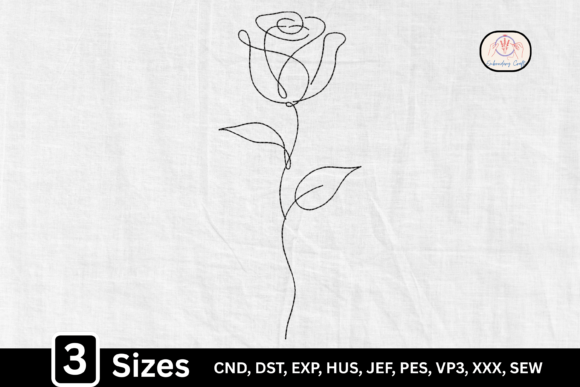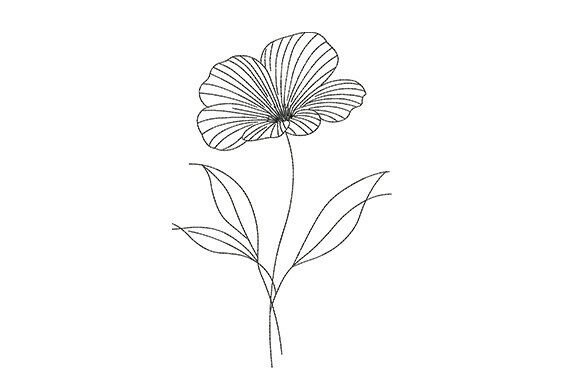
Minimalist Line Flower
A Designer’s Real-World Review for Boutique Sweatshirt Projects
As an embroidery designer who’s developed collections for over a dozen small clothing brands — from Etsy sellers launching their first hoodie line to indie boutiques curating seasonal lifestyle apparel — I approached Minimalist Line Flower with very specific expectations. Not just “Will it stitch?” but: Does it elevate the garment? Does it feel intentional, not incidental? Does it hold up under commercial embroidery scrutiny — and more importantly, under customer gaze?
First Impression: Quiet Confidence, Not Quiet Compromise
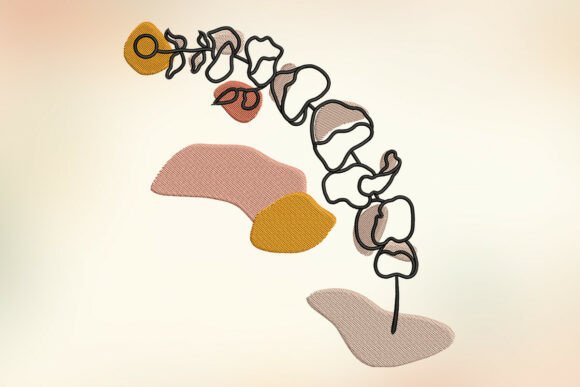
The moment I opened the Minimalist Line Flower embroidery file, I felt that rare alignment between title and execution: this is truly an outline flower — no fill stitches, no shading, no decorative flourishes. Just clean, purposeful line work. The 3061-stitch count (at the 4.00" height) signals thoughtful economy — not sparse, not thin, but precisely calibrated. It breathes. On screen, the vector-like flow suggests fluidity; in the hoop, it translates into graceful tension across fabric. This isn’t a “cute” flower or a “bold” botanical — it’s minimal in philosophy and line in execution. Feminine without being fussy. Rustic without being rough. Playful only in its lightness.
How It Lives on Sweatshirt Fabric
I tested Minimalist Line Flower across five real-world sweatshirt scenarios — all common for small shop product development:
- Neutral crewnecks (heather grey, oat, charcoal): The design reads with quiet authority — crisp, legible, and instantly premium. No visual competition. Perfect for chest placement on relaxed-fit styles.
- Dark fabric (navy, black, deep burgundy): With high-contrast thread (e.g., ecru or soft white), the line becomes sculptural — like ink drawn directly onto the fabric. Ideal for sleeve accents where subtlety reads as intentionality.
- Pastel hoodies (dusty rose, mint, butter yellow): Here, matching or tonal thread creates delicate cohesion. The design doesn’t shout — it whispers brand identity. Great for back-of-hoodie placements in limited drops.
- Oversized hoodies: At 5.00" height, Minimalist Line Flower holds proportion beautifully on dropped shoulders or upper-back panels. It avoids looking lost or swallowed by volume.
- Cozy seasonal layers (fleece-lined, brushed cotton): The low stitch density (evident in the 3061 count) prevents stiffness. Even on plush textures, the line remains defined — no puckering, no sinking.
Practical Embroidery Considerations — What You’ll Actually Need to Know
This isn’t just about aesthetics — it’s about execution. As a working designer, here’s how Minimalist Line Flower performs in production:
- Thread color contrast: Works best with medium-to-high contrast pairings. On darks, avoid near-black threads — opt for off-whites or muted creams. On lights, charcoal or deep sage adds grounded elegance.
- Stabilizer choice: Medium-weight cutaway stabilizer is ideal for sweatshirt embroidery durability. The design’s open structure means tear-away can shift under tension — especially on loopback fleece.
- Fabric texture & thickness: Performs exceptionally well on mid-to-heavyweight cotton blends (8–10 oz). Avoid ultra-thin poly-blends unless using lightweight stabilizer + reduced top tension.
- Hoop size & placement: Fits comfortably in a 5x7" hoop — critical for small shops using compact commercial or home embroidery machines. Chest placement requires minimal re-hooping; sleeve or back layouts stay stable thanks to balanced stitch distribution.
- Washing durability: With proper stabilization and quality thread, this design survives repeated cold washes without fraying or distortion. The continuous line path minimizes thread jump points — a subtle but vital win for longevity.
Why It Strengthens Your Boutique Brand — Beyond the Stitch
For small shop owners and Etsy sellers, every design choice compounds brand perception. Minimalist Line Flower isn’t decorative filler — it’s a strategic asset. Its restraint builds trust: customers read it as handmade intention, not mass-produced clip art. In lifestyle product photography, it adds narrative weight without clutter — think flat lays with ceramic mugs and linen napkins, where the embroidery catches light just enough to invite closer look. On printable mockups or digital listings, it scales cleanly across thumbnails and detail views — no pixelation, no loss of character.
It also supports flexibility in your design assets. Use it solo for monochrome collections. Pair it with a single-word brand tagline (stitched below, same thread) for custom apparel branding. Layer it subtly in corner placements on tote bags or tea towels — reinforcing visual recognition across product categories. And because it’s rooted in the Outline Flowers category, it fits seamlessly into broader botanical themes without demanding thematic consistency.
A Final Note for Commercial Embroidery & Digital Sellers
If you’re sourcing this as a digital embroidery file for resale or client work, remember: the included formats — PES, DST, EXP, HUS, JEF, CSD, XXX — cover nearly all major machine ecosystems. But always verify hoop size compatibility before finalizing production runs. Also confirm whether the 5.00" version maintains proportional integrity — some scaling can distort line weight or junction sharpness. When used thoughtfully, Minimalist Line Flower elevates a simple sweatshirt into a small shop product with emotional resonance. It says: We chose this. We made this matter.
For the boutique brand building slow, intentional collections — not fast inventory churn — this machine embroidery design delivers quiet strength. It doesn’t need volume to be seen. It just needs the right fabric, the right thread, and the right hand behind the hoop.