Hibiscus Butterflies
A Lush, Light-Hearted Design That Feels Like Summer in Thread
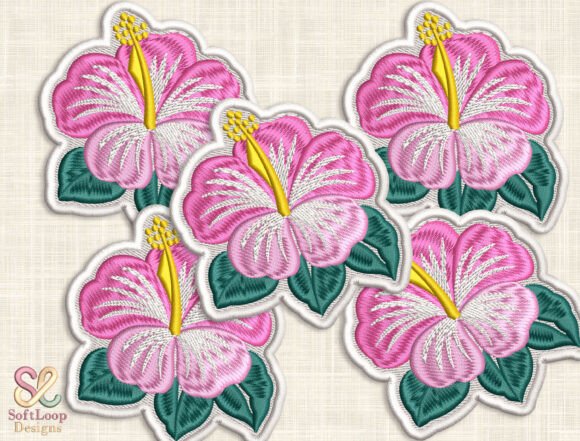
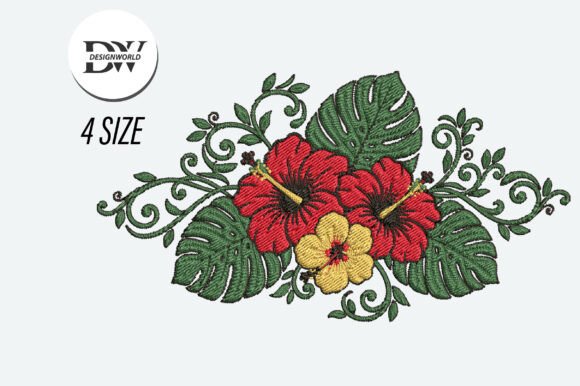
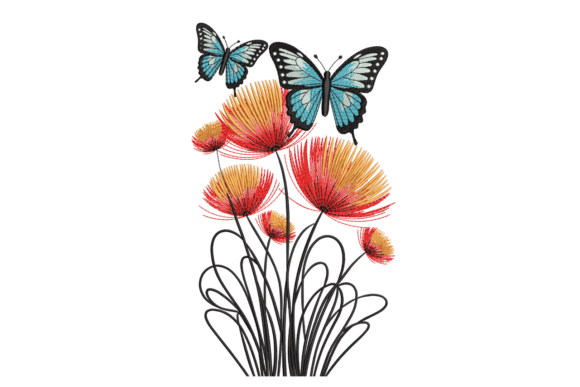
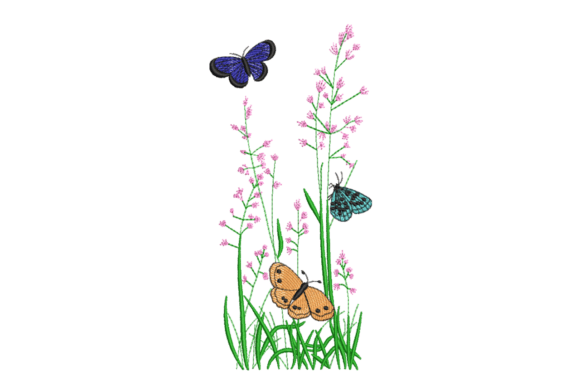
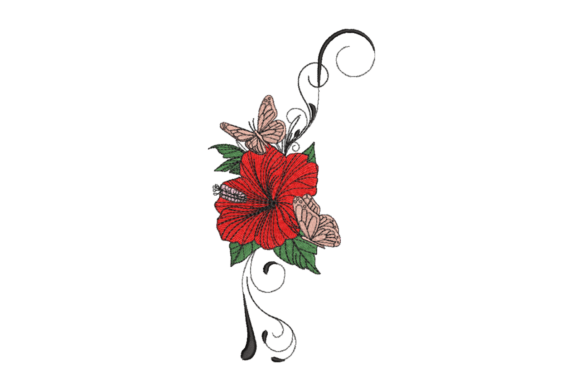
First impression? Hibiscus Butterflies lands with quiet confidence—not loud or fussy, but full of gentle movement and botanical warmth. The hibiscus blooms are stylized just enough to read clearly at medium scale, while the butterflies flutter with soft asymmetry that avoids looking stiff or clip-art-like. There’s breathing room between elements, no overcrowding, and a natural flow from left to right—like something you’d sketch in a garden journal before digitizing it for real work. It’s not “cute” in a juvenile way; it’s graceful, slightly tropical, and quietly sophisticated. That makes Hibiscus Butterflies feel right at home on handmade products where charm meets craftsmanship: think linen tea towels for a boutique kitchen line, organic cotton baby onesies, or relaxed-fit sweatshirts for a small apparel brand focused on mindful living.
Where It Shines—and Where It Asks for Thoughtful Handling
I recently tested Hibiscus Butterflies on a custom embroidered tote bag for a local florist’s pop-up shop. Natural canvas, medium weight, lightly textured—we used tear-away stabilizer and 40-weight rayon thread. The result was clean, vibrant, and instantly recognizable. Customers paused mid-aisle to ask about the design. That tells me Hibiscus Butterflies carries visual weight without shouting. It works beautifully on tote bags, pillow covers, aprons, and kitchen towels—surfaces where the design has space to breathe and the fabric supports crisp stitch definition.
For apparel, it holds up well on crewneck sweatshirts and structured caps—but only when placed thoughtfully. On curved surfaces like front-panel caps, I recommend stitching a test version first: the outermost butterfly wing can distort slightly if hooping tension isn’t even or if the fabric shifts during satin-stitching. On stretchy knits (think lightweight t-shirts), use cutaway + topping, and consider simplifying small fill-stitch areas if your machine struggles with dense transitions. Hibiscus Butterflies isn’t overly dense, but its layered petals do rely on smooth fill stitch execution—so avoid ultra-thin or loosely woven fabrics unless you reinforce them properly.
On dark fabric? Yes—but check contrast early. Some thread palettes mute against charcoal or navy. I ran a quick black-and-white mockup before finalizing colors for a holiday gift set of embroidered napkins, and it confirmed that lighter yellows and sky blues popped best. For baby embroidery or nursery decor, the design reads as soothing rather than busy—no sharp angles or aggressive detailing. That softness builds trust: parents see care in the line work, not just decoration.
What It Adds to Your Finished Product—Beyond Just Looks
Hibiscus Butterflies elevates perceived value without demanding premium pricing. It feels intentional, not generic—a detail that signals “this was chosen, not grabbed.” That matters for Etsy sellers listing personalized gifts or small shop owners curating seasonal collections. When customers receive a sweatshirt with Hibiscus Butterflies stitched just above the hem, they don’t just see embroidery—they feel the season, the care, the quiet intention behind it. That translates directly to repeat orders, social shares, and word-of-mouth referrals.
It also supports brand consistency beautifully. Whether you’re using it across a line of botanical-themed tea towels, matching aprons and oven mitts, or as a subtle accent on embroidered patches for a clothing line, Hibiscus Butterflies maintains cohesion without repetition fatigue. Its single-flower, nature-based theme fits naturally within the Single Flowers Plants category, but it doesn’t feel limited by it—it’s flexible enough for coastal boutiques, wellness studios, or even wedding favor packaging (imagine it stitched on muslin sachets filled with dried lavender).
Practical Designer Notes You’ll Want Before Threading Your Needle
Before committing to Hibiscus Butterflies in a client project or batch production:
- Test on scrap fabric first—especially if you’re using textured weaves, dark backgrounds, or lightweight cottons. Stitch density and thread tension interact differently across materials.
- Review small details—the butterfly antennae and petal edges rely on fine running stitches. Zoom in on your embroidery software to confirm clarity at your intended size.
- Check hoop size compatibility. If you’re working with smaller hoops (e.g., 4x4"), verify whether Hibiscus Butterflies fits comfortably—or if it needs scaling down without losing legibility.
- Use proper stabilizer. Medium-weight tear-away works for stable wovens; switch to cutaway + topping for knits or delicate linens.
- Confirm licensing terms before selling finished items or bundling Hibiscus Butterflies into digital product kits. Not all embroidery files permit commercial use out of the box—even if labeled for Embroidery.
- Compare light and dark mockups. A printable mockup helps spot contrast issues before stitching begins—especially important for holiday embroidery or gift-focused product lines.
Final Thought: A Design That Grows With Your Craft Business
Hibiscus Butterflies isn’t just another floral motif—it’s a versatile, emotionally resonant asset. It performs reliably across custom apparel, handmade home goods, and boutique merchandise. It invites personalization (swap thread colors to match a brand palette) without sacrificing integrity. And because it sits comfortably between illustration and embroidery logic—clear outlines, balanced negative space, thoughtful stitch layering—it translates well into both physical and digital design assets.
Whether you’re an Etsy seller building a cohesive botanical collection, a craft fair vendor refreshing summer stock, or a designer sourcing embroidery files for client-branded merchandise, Hibiscus Butterflies earns its place not through novelty, but through quiet reliability. It stitches cleanly, reads warmly, and stays memorable—long after the hoop comes off and the finished product goes into the world.